
FSSAI Water Testing in Mumbai | NABL Accredited Lab
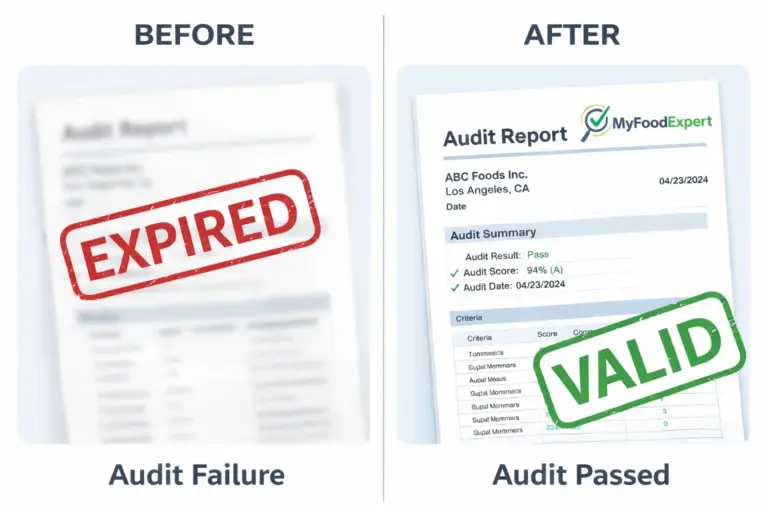
In Mumbai’s fast-paced food industry, an expired or missing water report is the number one reason for FDA audit failures and license rejections. Whether you operate a premium restaurant in Bandra, a high-volume cloud kitchen in Andheri, or a manufacturing unit in Navi Mumbai, securing a valid IS 10500 water testing report is a legal necessity.
The Food Safety and Standards Authority of India (FSSAI) mandates that every Food Business Operator (FBO) must use water that is safe for human consumption. To prove this, you must test your water at an NABL-accredited water testing lab in Mumbai.
At MyFoodExpert.in, we simplify this process with doorstep sample collection, rapid testing, and digital reports ready for immediate FoSCoS portal upload.
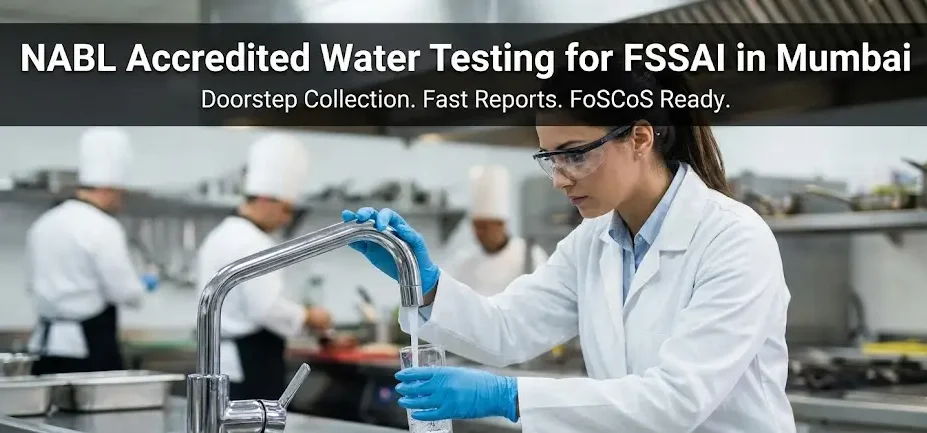
Why You Need a Water Testing Report for FSSAI License
Under Schedule 4 of the FSSAI regulations, water is classified as an ingredient. If you are applying for a new food license or navigating a renewal, your water potability certificate for FSSAI acts as your primary legal defense.
- Mandatory for FoSCoS: You cannot complete a license renewal without a valid FoSCoS water testing report upload.
- Surprise FDA Audits: When Maharashtra Food Safety Officers inspect your premises, your water test report and pest control records are the first documents verified.
- Strict NABL Requirement: FSSAI rejects reports from uncertified labs. Your test must come from an approved water testing lab near me carrying the NABL ISO/IEC 17025 accreditation and a verifiable QR code.
Specialized Water Testing for Every Mumbai Food Business
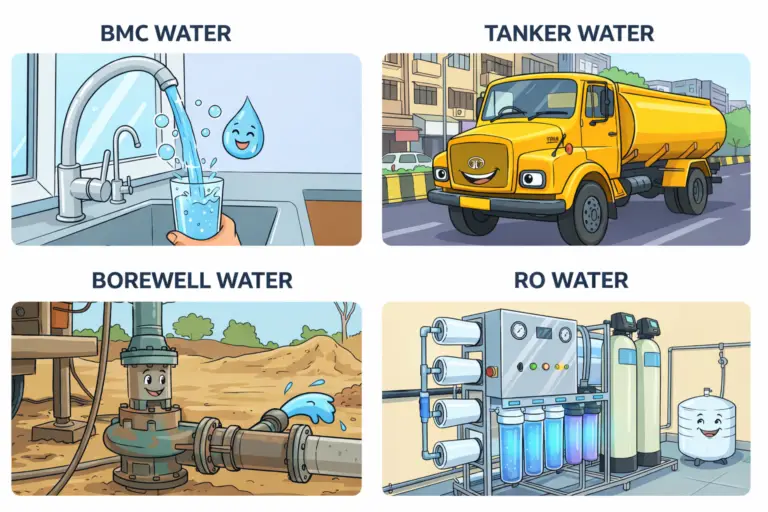
Because Mumbai FBOs rely on a variety of water sources, the required testing parameters change based on your supply. We offer specialized water testing laboratory in Mumbai services for every scenario:
1. BMC Water Potability Testing Mumbai
Even if the Brihanmumbai Municipal Corporation (BMC) provides treated water, you are legally responsible for its quality once it enters your overhead or underground storage tanks. We test for pipeline contamination and bacterial buildup in storage facilities.
2. Tanker Water Testing Lab
Many commercial hubs and restaurants rely on private water tankers. Because the source fluctuates daily, regular tanker water testing in Mumbai is heavily scrutinized by FSSAI auditors to prevent sudden outbreaks of waterborne diseases.
3. Borewell Water Testing for Food Business
Common for large manufacturing units and Mega Food Parks on the outskirts of Thane and Palghar. Groundwater carries severe risks, making heavy metal and pesticide residue testing an absolute necessity.
4. RO Water Testing for FSSAI
If you use commercial purifiers, FSSAI mandates testing the “output” water to ensure your filtration membranes are actively removing contaminants and maintaining the correct pH.
FSSAI Water Testing Parameters Explained (IS 10500:2012)
What exactly does a NABL accredited water testing lab check? The IS 10500 standard breaks down into four critical categories:
- Physical Parameters: Checks turbidity (max 1 NTU acceptable), color, odor, and ensures the pH remains between 6.5 and 8.5.
- Chemical Parameters: Analyzes Total Dissolved Solids (TDS, acceptable limit 500 mg/L), Hardness (acceptable limit 200 mg/L), Chlorides, and Sulphates.
- Microbiological Parameters: The most critical check. E. coli and Total Coliforms must be completely absent in a 100 ml sample to prevent food poisoning.
- Heavy Metals: Tests for toxic elements like Lead (max 0.01 mg/L), Arsenic, and Mercury, which are critical for borewell and packaged water plants.
2026 FSSAI Water Compliance Trends Every Mumbai FBO Must Know
Staying ahead of regulatory updates keeps your business operational. Here is what is trending for FSSAI enforcement in 2026:
- Packaged Drinking Water Overhaul: As of January 2026, FSSAI has replaced the mandatory BIS certification for packaged water with its own strict “Scheme of Testing.” Packaged drinking water testing labs now require rigorous monthly and quarterly batch-testing protocols.
- Health Claims Validation: If your beverage label claims to be “Natural,” “Mineral Enriched,” or “Alkaline,” FSSAI now strictly demands an advanced water test report to validate the technical dossier of these health claims.
- PFAS and Microplastics for Exporters: For export-oriented units operating near Mumbai’s ports, international buyers (FDA/EU) are increasingly demanding screening for “forever chemicals” alongside standard heavy metal water testing.
Validity & Cost of FSSAI Water Testing in Mumbai
- Validity of water test report for FSSAI: A standard report is legally valid for exactly six months from the date of issue. High-risk units like dairies and meat processors require monthly testing.
- Cost of FSSAI water testing in Mumbai: The price depends entirely on your water source. Basic BMC potability testing is highly cost-effective, while full IS 10500 testing (with heavy metals for borewells) requires advanced chromatography, carrying a slightly higher fee.
FSSAI Water Testing Parameters Explained: The Complete IS 10500:2012 Checklist
When a Maharashtra Food Safety Officer inspects your kitchen or manufacturing unit, they aren’t just looking for a piece of paper—they are verifying that your water meets the strict IS 10500:2012 drinking water specifications.
To maintain your FSSAI license and ensure absolute food safety, your NABL-accredited water test report must show that your water supply falls within the acceptable limits across four major categories: Physical, Chemical, Microbiological, and Heavy Metals.
FSSAI Water Testing Parameters Explained
Standard IS 10500:2012 Parameters for Food Business Operators
| Test Category | Parameter | Acceptable Limit | Why FSSAI Checks This |
|---|---|---|---|
| Physical | pH Value | 6.5 to 8.5 | High/low pH alters food taste and corrodes kitchen equipment. |
| Physical | Turbidity | 1 NTU (Max) | High turbidity indicates dirt/sediment that shields bacteria from UV purifiers. |
| Physical | Color & Odor | 5 Hazen Units / Agreeable | Unpleasant smell or color immediately triggers audit failures. |
| Chemical | Total Dissolved Solids (TDS) | 500 mg/L | Excess TDS affects the texture of dough, beverages, and ice. |
| Chemical | Total Hardness (as CaCO3) | 200 mg/L | Hard water causes severe scaling in commercial espresso machines and boilers. |
| Chemical | Chlorides | 250 mg/L | High chlorides make water taste salty and indicate possible sewage mixing. |
| Microbiological | E. coli / Thermotolerant Coliforms | Strictly ABSENT / 100 ml | CRITICAL: Presence indicates fecal contamination. Immediate cause for license suspension. |
| Microbiological | Total Coliform Bacteria | Strictly ABSENT / 100 ml | Indicates general bacterial contamination in storage tanks or pipelines. |
| Heavy Metals | Lead (Pb) | 0.01 mg/L | Highly toxic. Commonly leaches from old BMC pipes or untreated borewell water. |
| Heavy Metals | Arsenic (As) | 0.01 mg/L | Naturally occurring toxic metal, strictly monitored in groundwater/borewell sources. |
These parameters are tested under NABL-accredited scope and accepted by FDA Maharashtra for FSSAI license issuance, renewal, and audit compliance. Our NABL-accredited lab tests all IS 10500:2012 parameters required for FSSAI audits. Reports are accepted by FDA Maharashtra without objections.
Are your TDS or Hardness levels slightly above the acceptable limit? If no alternate source is available, FSSAI regulations allow for an “extended permissible limit” in the absence of an alternate source, provided the microbiological parameters (E. coli) are completely absent. However, installing a commercial RO system is the safest long-term fix.
Need this tested today? Don’t let a confusing parameter limit put your food business at risk. MyFoodExpert offers doorstep sample collection across Mumbai. We test your water in our NABL-accredited labs and provide an easy-to-understand, FoSCoS-ready digital report.
Water Testing Services Near Me: Serving All of Mumbai
You do not need to search for a “water testing service near me” and transport samples across the city yourself. MyFoodExpert.in deploys trained technicians directly to your kitchen or factory to collect samples in sterilized containers, preventing false-positive microbial failures.
We service:
South Mumbai
- Colaba
- Cuffe Parade
- Nariman Point
- Marine Lines
- Churchgate
- Fort
- Ballard Estate
- Crawford Market
- Kalbadevi
- Bhuleshwar
- Girgaon
- Charni Road
- Grant Road
- Mumbai Central
- Mahalaxmi
- Tardeo
- Worli
- Prabhadevi
- Lower Parel
- Parel
- Byculla
- Mazgaon
- Sewri
- Wadala
Western Suburbs
Bandra to Andheri
- Bandra West
- Bandra East
- Khar West
- Khar East
- Santacruz West
- Santacruz East
- Vile Parle West
- Vile Parle East
- Andheri West
- Andheri East
- Jogeshwari West
- Jogeshwari East
Goregaon to Dahisar
- Goregaon West
- Goregaon East
- Malad West
- Malad East
- Kandivali West
- Kandivali East
- Borivali West
- Borivali East
- Dahisar East
- Dahisar West
Central Suburbs
Kurla to Ghatkopar
- Kurla West
- Kurla East
- Chembur
- Tilak Nagar (Chembur)
- Chunabhatti
- Ghatkopar West
- Ghatkopar East
Vidyavihar to Mulund
- Vidyavihar West
- Vidyavihar East
- Vikhroli West
- Vikhroli East
- Bhandup West
- Bhandup East
- Nahur
- Mulund West
- Mulund East
Harbour Line Areas
- Govandi
- Mankhurd
- Trombay
- Deonar
- Cotton Green
- Reay Road
- Dockyard Road
- King’s Circle
- Antop Hill
Navi Mumbai
- Vashi
- Nerul
- Belapur
- Kharghar
- Airoli
- Ghansoli
- Kopar Khairane
- Sanpada
- CBD Belapur
- Taloja
Thane (MMR)
- Thane West
- Thane East
- Kalwa
- Majiwada
- Wagle Estate
- Ghodbunder Road
Don’t let an expired water report shut down your kitchen. Ensure your business remains audit-proof and compliant. Book your sample collection with the best water testing lab in Mumbai for FSSAI today.
Water Testing FAQs
Q: How much does FSSAI water testing cost in Mumbai?
A: The cost of FSSAI water testing in Mumbai depends on your water source. Basic potability tests for BMC or RO water are highly affordable, typically ranging between ₹1,500 to ₹3,000. Comprehensive IS 10500 testing, which includes heavy metals and pesticide residue for borewell or tanker water, costs slightly more. At MyFoodExpert.in, we offer transparent pricing with zero hidden fees for Mumbai FBOs.
Q: Is BMC water testing enough for an FSSAI license in Mumbai?
A: No. Even if the BMC supplies safe municipal water, FSSAI mandates independent water testing from a NABL accredited lab once the water enters your building’s overhead or underground storage tanks. This proves to FDA Maharashtra inspectors that your internal pipelines and tanks are free from bacterial contamination.
Q: Do cloud kitchens in Mumbai need tanker water testing?
A: Yes. Since many cloud kitchens and commercial restaurants in Andheri, Bandra, and Lower Parel rely on private water tankers, FSSAI strictly requires tanker water testing. Because the source of tanker water fluctuates, you must possess a valid, six-month potability certificate to maintain compliance and avoid FoSCoS portal rejections.
Q: How can I book water sample collection in Thane or Navi Mumbai?
A: You do not need to transport water samples yourself. MyFoodExpert.in provides professional doorstep water sample collection across the entire Mumbai Metropolitan Region, including Thane, Navi Mumbai, and Palghar, ensuring your samples are collected in sterilized containers to prevent false-positive failures.
Q: Is water testing mandatory for an FSSAI license renewal?
A: Yes. A valid water potability certificate is legally mandatory for both new FSSAI license approvals and renewals. You must complete a FoSCoS water testing report upload to process your application. Without it, your application will be instantly rejected by the Food Safety Officer.
Q: What is the validity of a water testing report for FSSAI?
A: An FSSAI water test report is legally valid for exactly six months from the date of issue. High-risk food businesses, such as dairies, meat processors, and packaged drinking water plants, must conduct NABL water testing on a monthly or quarterly basis depending on their specific FSSAI category.
Q: Is NABL accreditation compulsory for FSSAI water testing?
A: Absolutely. FSSAI only accepts water test reports from NABL accredited water testing labs holding ISO/IEC 17025 certification. Reports from local, non-certified pathology labs will be rejected during audits, resulting in wasted money and potential license suspension.
Q: Can I use old or expired water test reports for FoSCoS renewal?
A: No. Relying on an expired report is the leading cause of FSSAI audit failures. Your IS 10500 water testing report must be current (under six months old) at the exact time of your license renewal application or physical FDA inspection.
Q: What parameters are tested under the IS 10500 drinking water standard?
A: A complete IS 10500 water testing report for FSSAI analyzes four key categories:
- Physical Parameters: Turbidity, pH (6.5 to 8.5), color, and odor.
- Chemical Parameters: Total Dissolved Solids (TDS), hardness, and chlorides.
- Microbiological Parameters: Crucial checks for E. coli, coliforms, and Total Plate Count to prevent food poisoning.
- Heavy Metals: Screening for toxic elements like lead, arsenic, and mercury.
Q: Is borewell water testing mandatory for food factories?
A: Yes. Manufacturing units using groundwater must conduct rigorous borewell water testing for FSSAI. Because groundwater is highly susceptible to industrial runoff, FSSAI places heavy emphasis on screening borewell water for heavy metals and pesticide residues.
Q: What happens if my water fails the FSSAI lab test?
A: If your water sample fails any IS 10500 parameter, you must immediately halt its use for food preparation. Our experts at MyFoodExpert.in will guide you through corrective actions, such as upgrading your commercial RO system, installing UV filters, or chlorinating your storage tanks, followed by rapid re-testing to restore FSSAI compliance.
Q: Do I need to test RO/UV treated water for FSSAI?
A: Yes. If your commercial kitchen uses an in-house water purifier, FSSAI regulations require you to test the final “output” water. This RO water testing proves to auditors that your filtration membranes and UV lamps are actively eliminating pathogens and maintaining a safe TDS level.
Q: Do MyFoodExpert serve in other cities?
A: Yes, MyFoodExpert provides services across India nationwide. We cater to major cities, including Delhi, Surat, Ahmedabad, Chennai, Bangalore, Hyderabad, and many more.